
Reimagining font browsing as a personal, mobile-first experience.
Timeline
2 weeks
Fall, 2025
Role
Product Designer
Team
Sole Designer
Tools
Figma
The Challenge
Designers often default to the same familiar typefaces, not because of preference, but because existing font platforms make discovery feel overwhelming and impersonal. Most font browsing tools live on the web and function primarily as catalogs for downloading fonts, offering little support for inspiration or personal taste-building.
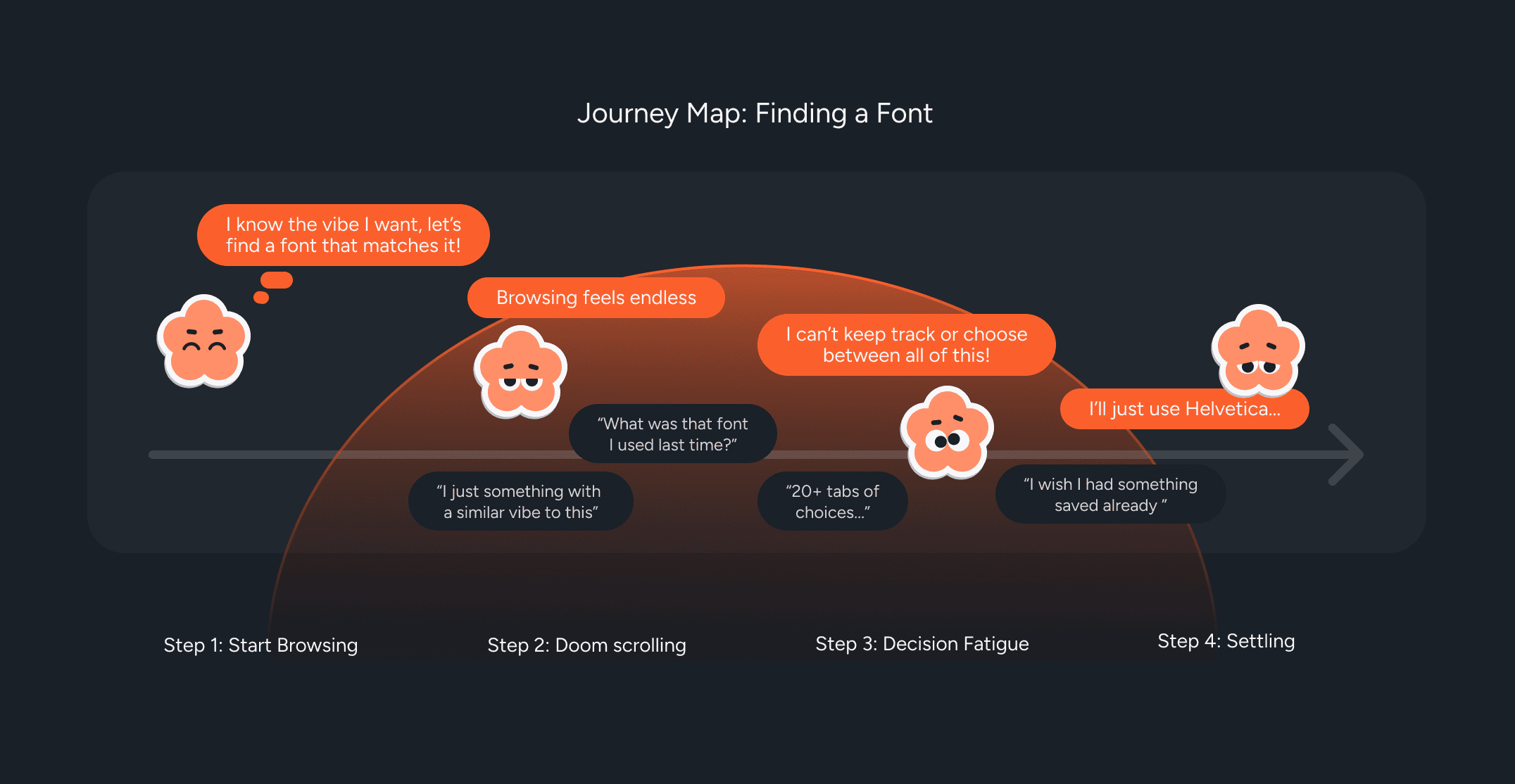
How might a font browsing experience help designers build personal taste and rediscover inspiration, rather than repeatedly defaulting to familiar typefaces?
The Solution
Typekins is a mobile font browsing app designed to turn font discovery into a personal, exploratory practice.
At the core of the experience are Typekins, five character-based archetypes that represent different typographic categories and collectively form a user’s font personality.
Onboarding
Introduces core features and sets the tone for a personalized approach to font discovery.


Font Browsing & Filters
Browse fonts through cards and Typekin-based filters
Font Scanner
Identify fonts from real-world references by snapping or importing photos, turning everyday typography into inspiration.


Profile
A personal archive for liked fonts, recent activity, and evolving font personality—designed to support reflection and reuse over time.
Font Details
Explore fonts through specimens, style testing, glyph views, and pairing suggestions to support informed design decisions.

Research Insights
Qualitative Data Analysis
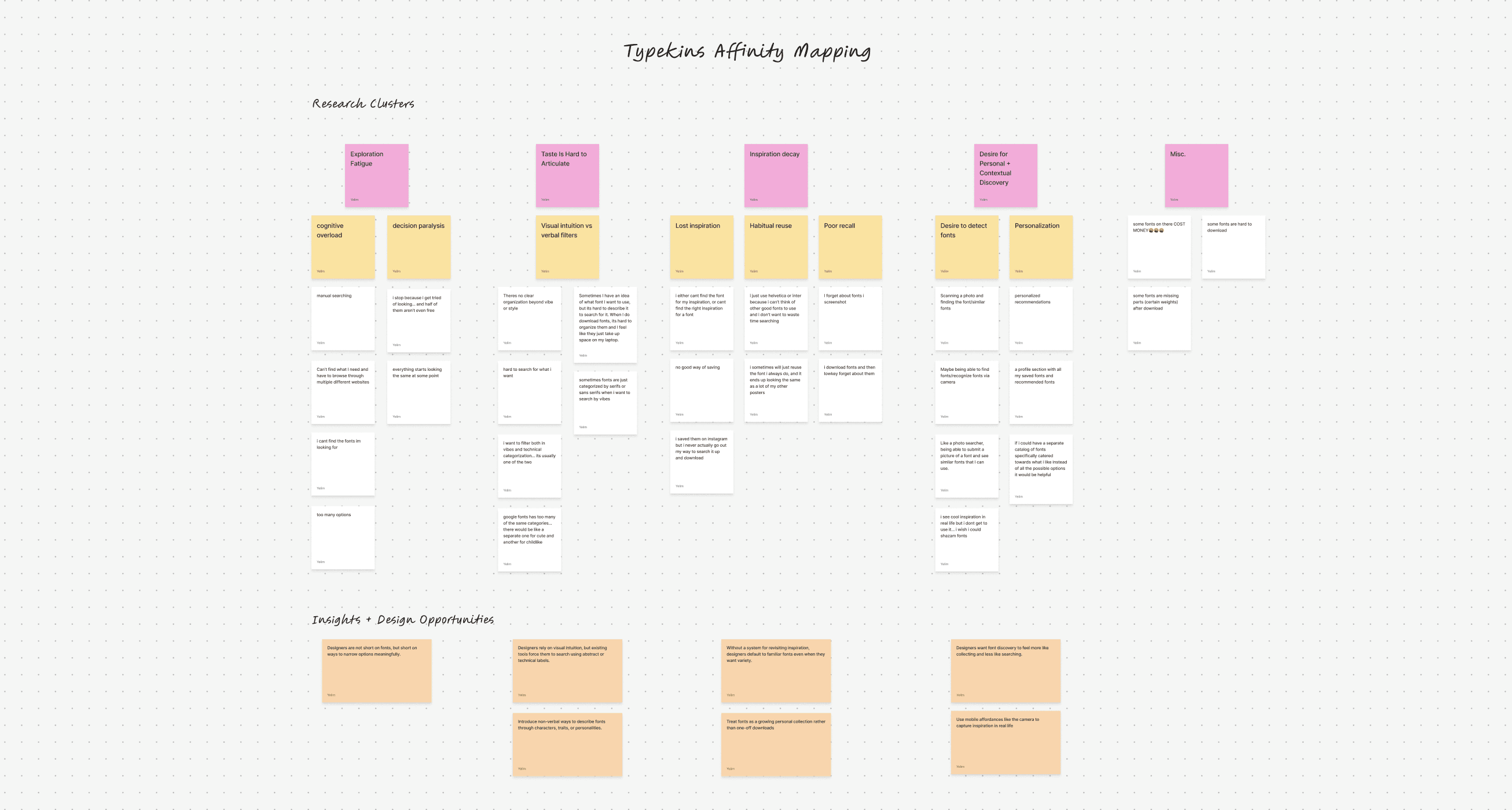
Affinity mapping with user interviews
This data is collected among 5 designers of varying expertise, mapped to organize interview insights, revealing common pain points in font discovery, inspiration retention, and personalization.
Quantitative Data Analysis
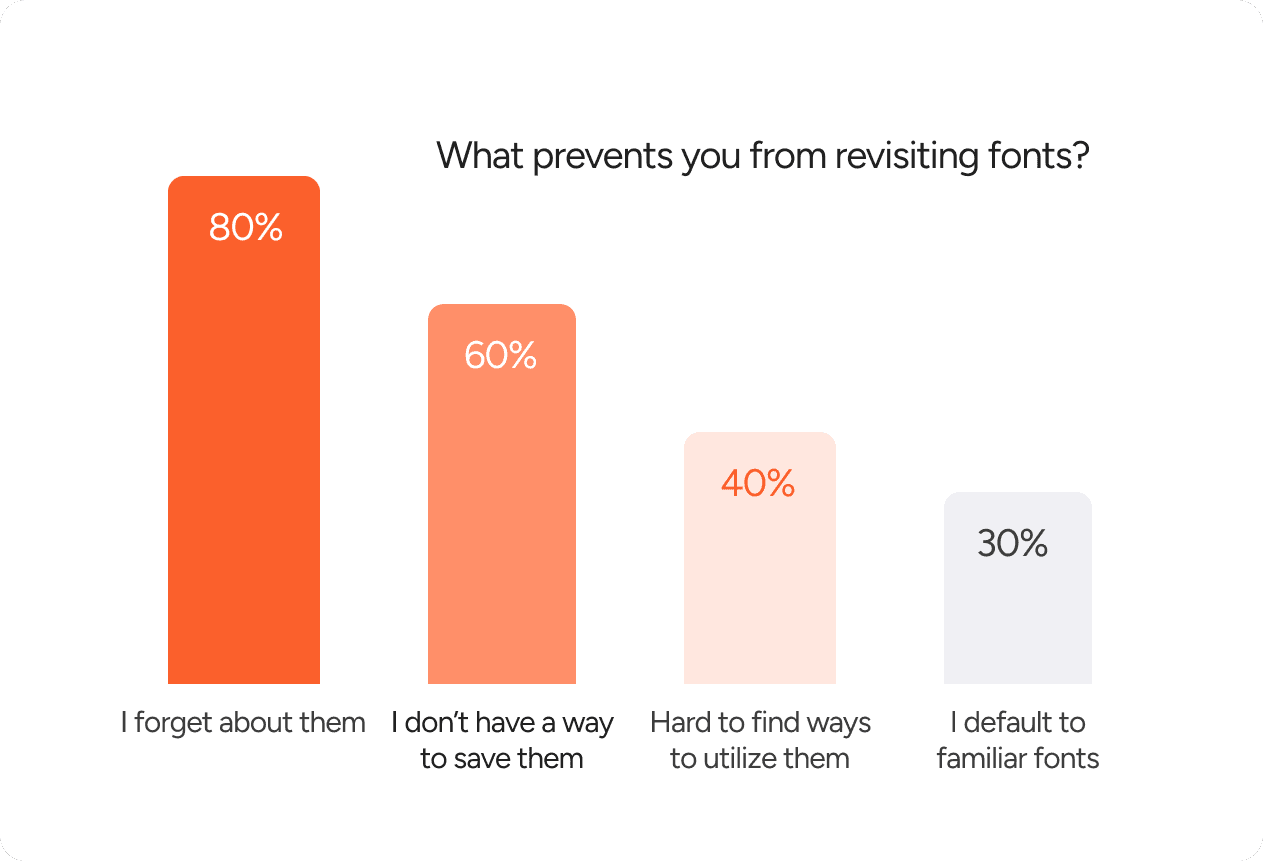
Why Fonts Get Forgotten
Designers often lose track of fonts they like due to poor organization and lack of easy ways to save or recall them, causing inspiration to fade before it can be reused.
Time Spent Browsing
Out of the 20 surveyed designers, 80% of designers spend over 10 minutes browsing fonts per session, suggesting that discovery is time-intensive and often inefficient.
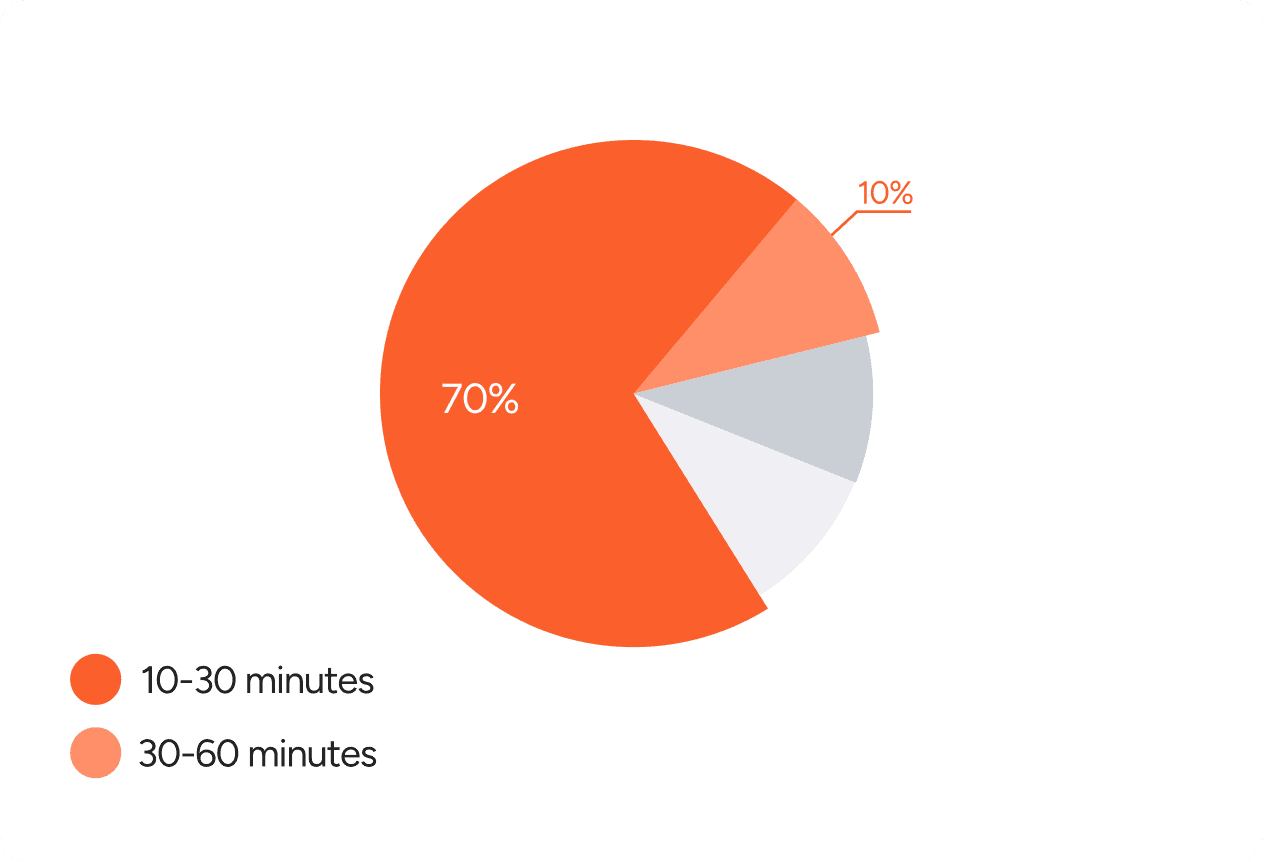
How Fonts Are (Not) Saved
Font tracking is largely unstructured, with many designers not saving fonts at all and others relying on scattered methods like screenshots or bookmarks.
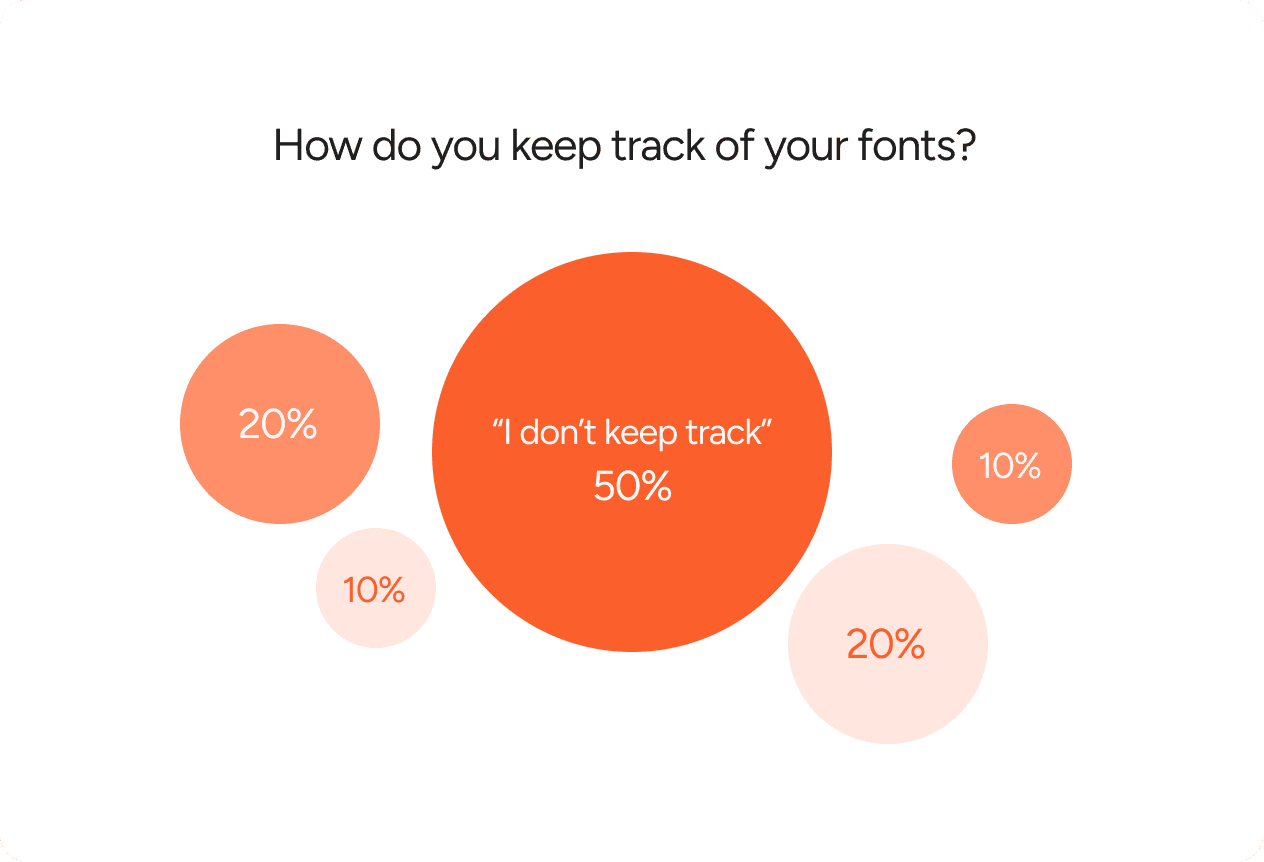
*This data is collected from a survey amongst 20+ designers of varying expertise
Concept Development
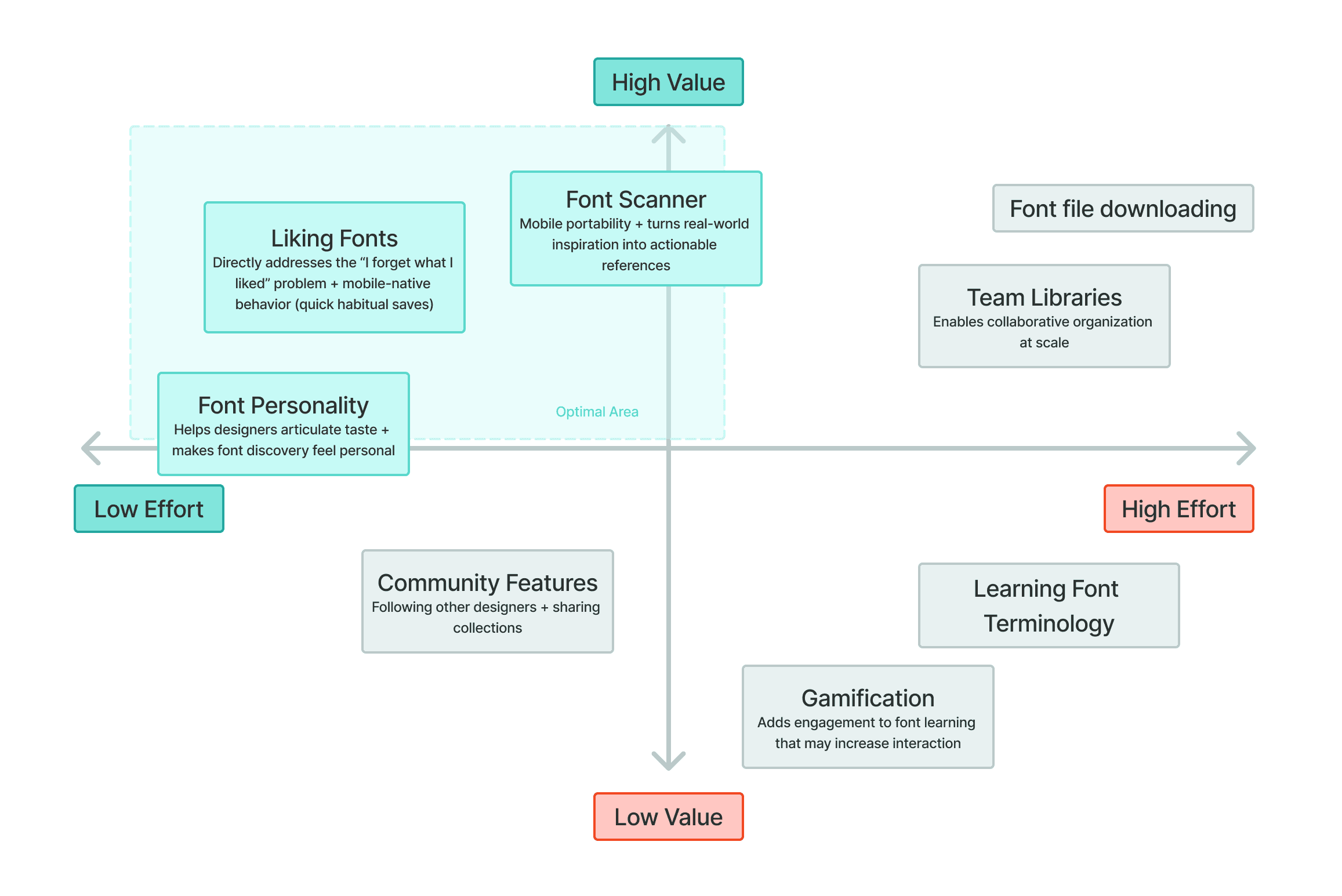
Creating a decision matrix to narrow down the general direction
I evaluated common font-browsing features through an effort-value lens. Since my goal was to create a mobile app, I targeted the low-effort & high-value zone that supports habitual, lightweight font discovery.
Constraints and direction
The app is
Meant to be lightweight, exploratory, and low time commitment
An inspiration-first space for discovering type habitually
A tool for building and understanding personal typographic taste over time
Designed to help designers save, revisit, and reflect on fonts
The app is NOT
A font marketplace or file-management tool
A replacement for full-scale desktop font browsing workflows
A social platform for following designers or sharing collections
A collaborative workspace for teams or shared libraries
Something that requires long, focused sessions
Design Process
User Flow Chart
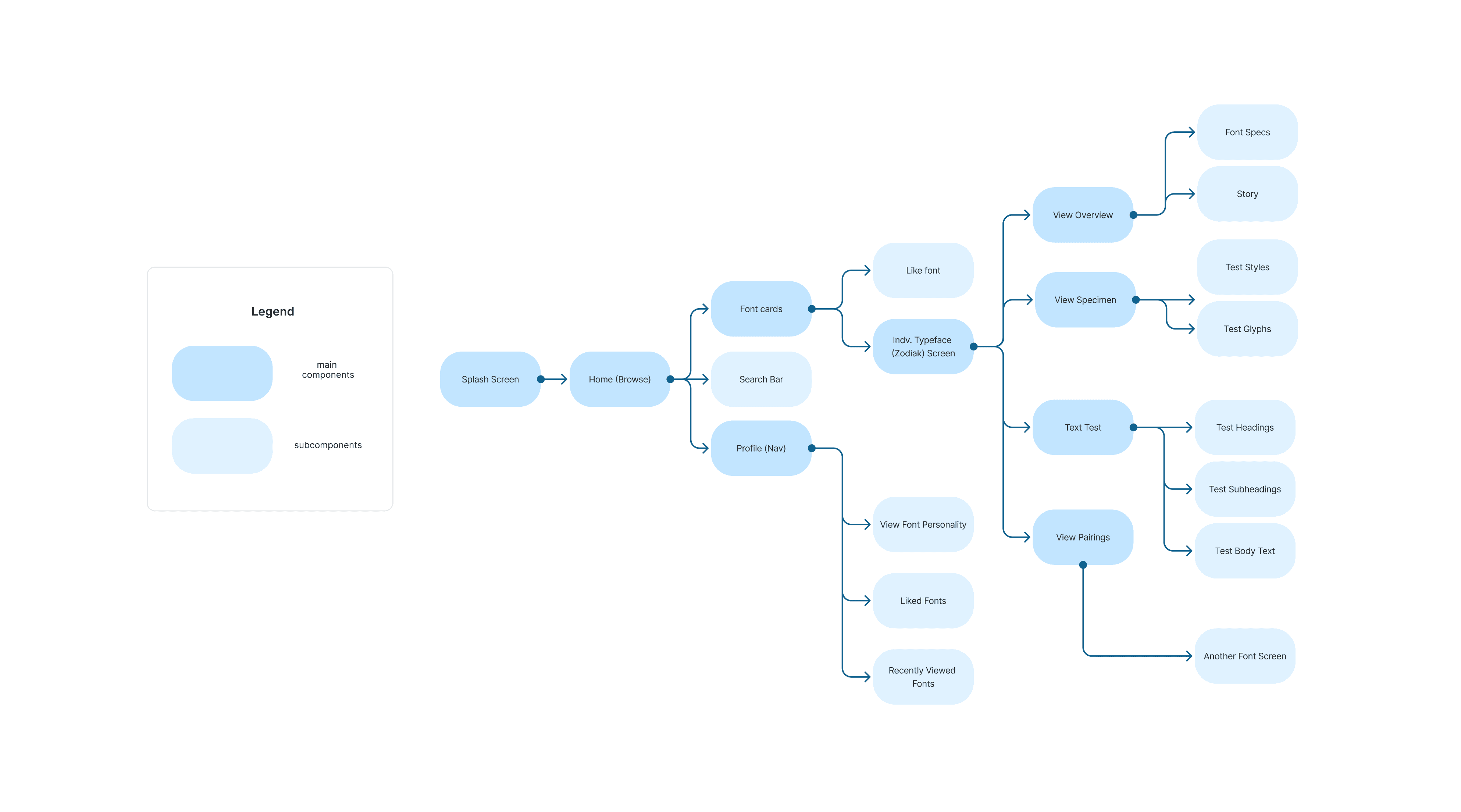
Maps the primary paths users take to discover, explore, save, and revisit fonts.
Early Wireframe Explorations
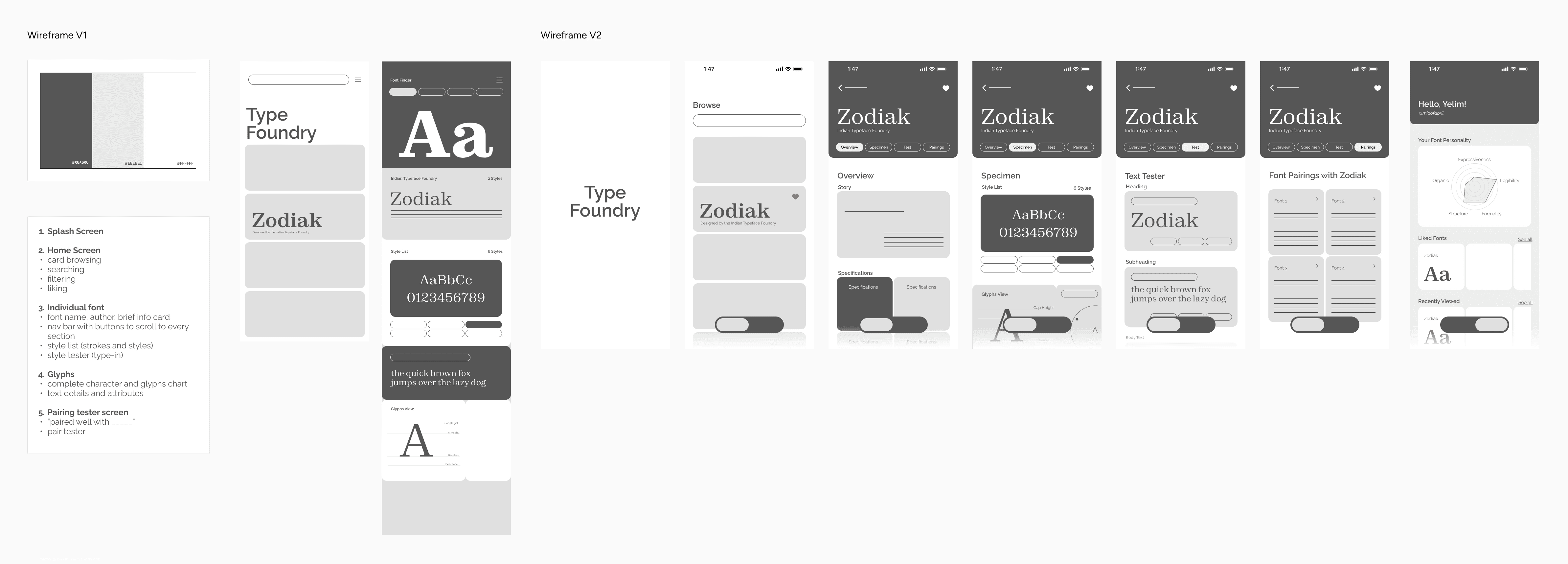
Two early versions of layout explorations focused on information hierarchy, interaction flow, and mobile-first usability
Design Decisions
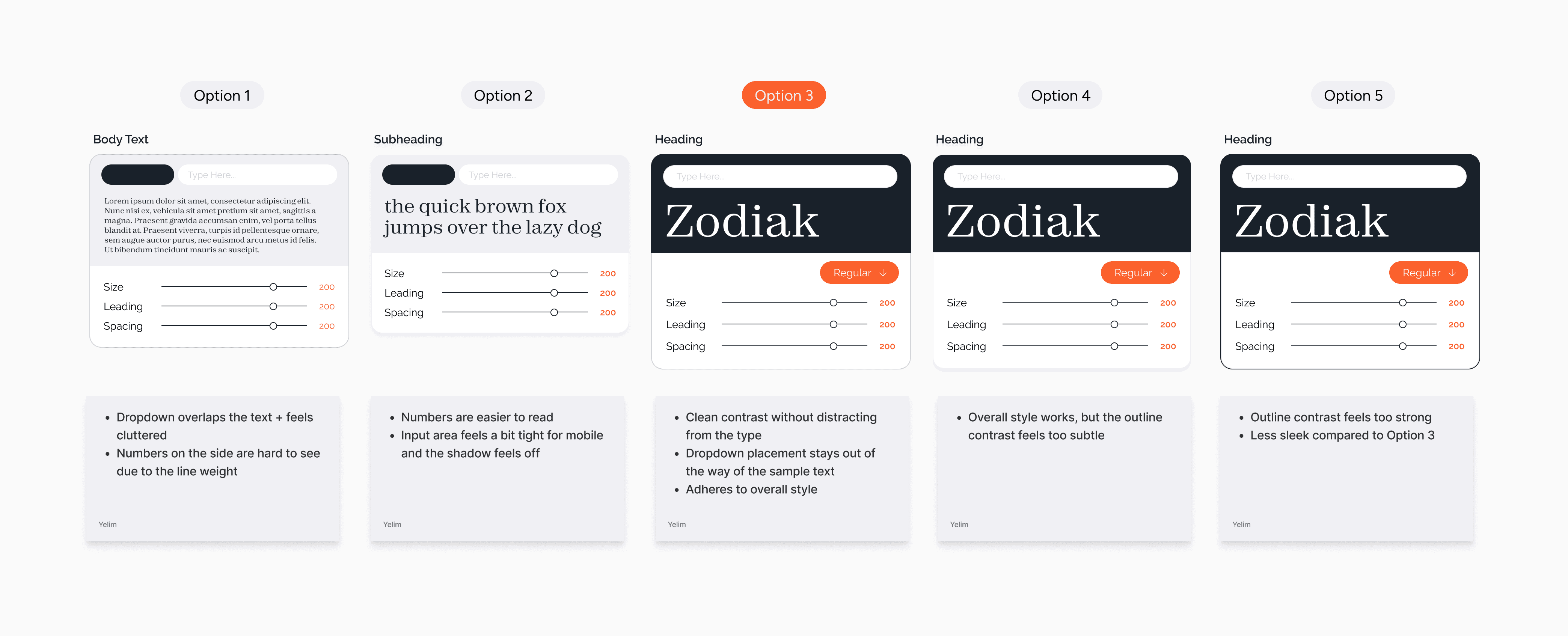
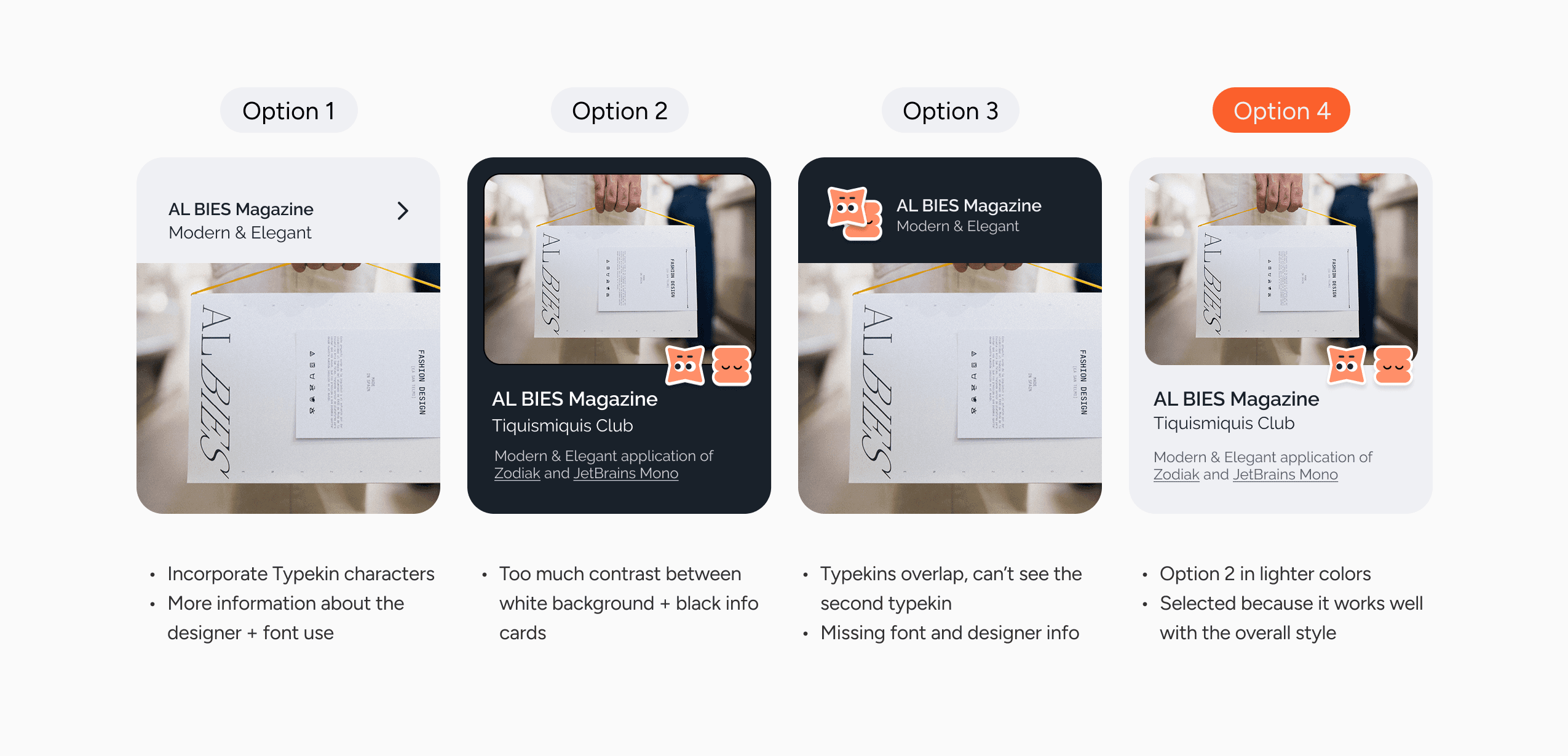
Through layout explorations, I tested how hierarchy and spatial grouping could clarify relationships between content and create a smoother browsing experience.
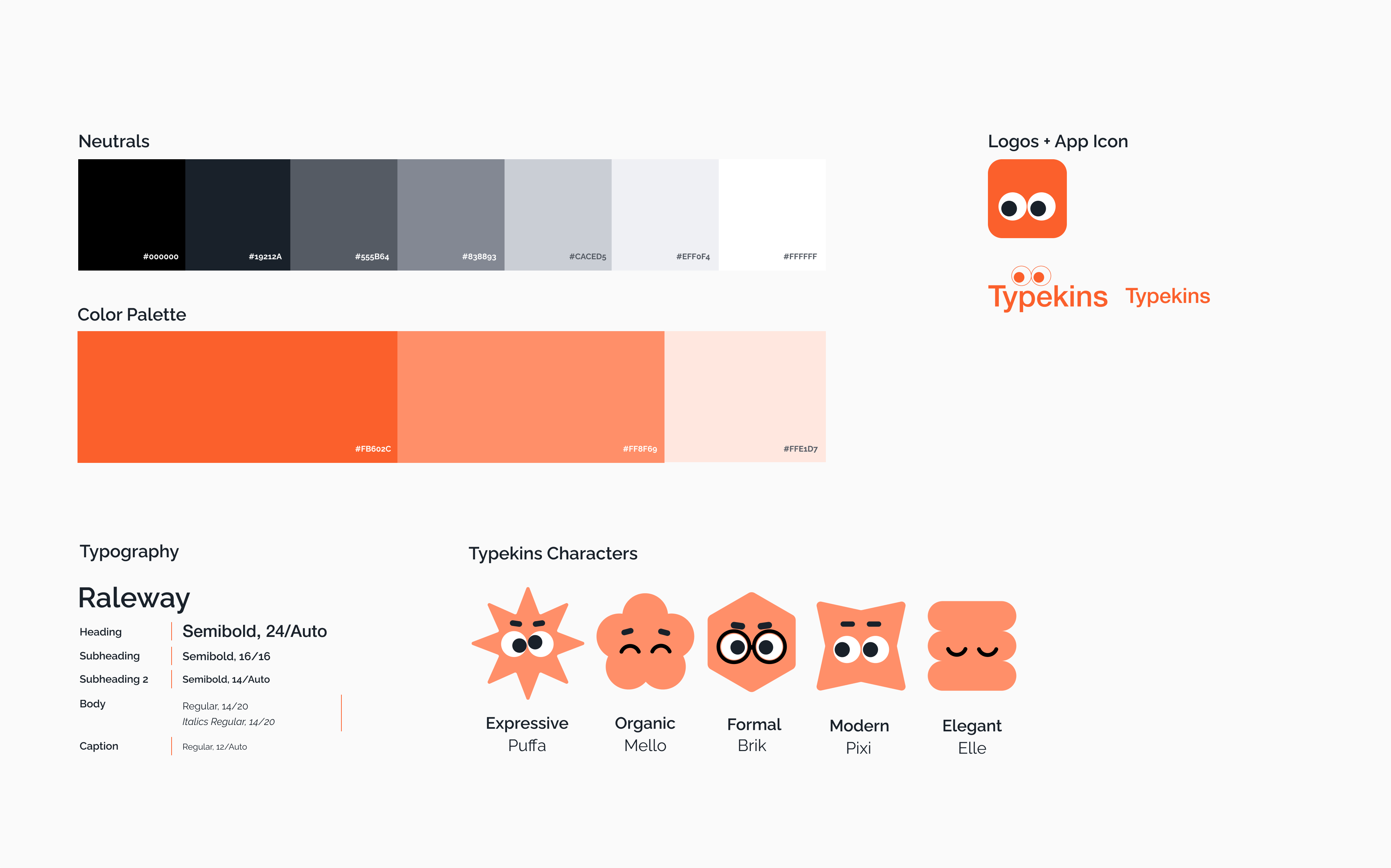
Design System
Reflection
Final thoughts on Typekins
Typekins pushed me to think more critically about the differences between mobile web and native mobile app design, and how small interface decisions like navigation patterns, button placement, and scroll behavior can significantly shape user experience. I became more intentional about usability, scroll fatigue, and testing assumptions rather than relying solely on visual intuition, and working deeply in Figma helped me better understand design systems and the logic behind effective UX.
Giving myself guiding questions throughout the process shifted my focus from aesthetics to user needs, helping me clarify why a mobile font app should exist and what value it could offer beyond existing tools.
I also learned the importance of restraint while designing Typekins, treating them as suggestions rather than decision-makers and becoming more aware of when features are helpful versus harmful depending on context. With more time, I would explore extending Typekins into a synced web experience, allowing users to move seamlessly between inspiration on mobile and practical font use on the web.