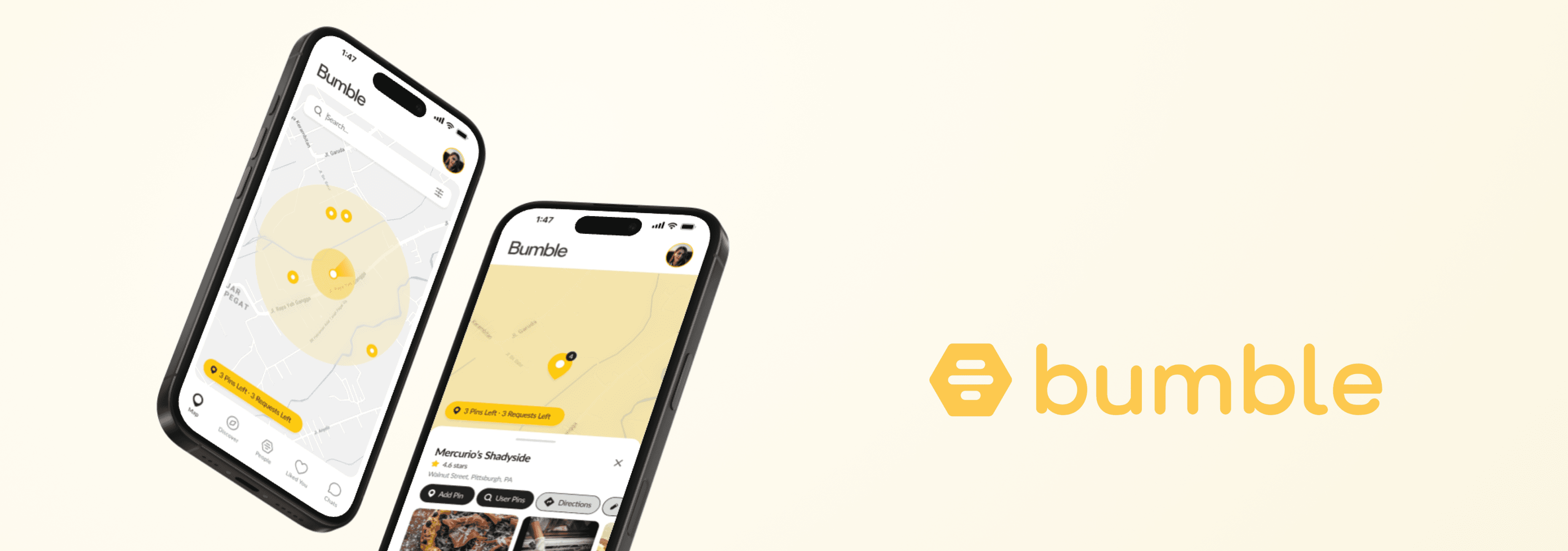
Transforming Bumble from endless swiping to shared places.
Timeline
4 weeks
Fall, 2025
Role
Product Designer
Team
Sole Designer
Tools
Figma
The Challenge
How can location services support engagement and profit, but in a way that keeps users aware, in control, and comfortable with how their location is used?
Dating apps today are flooded with shallow interactions and swiping fatigue. Many users spend hours scrolling through profiles without forming meaningful connections.
This project responded to a design brief that proposed precise location tracking to boost engagement and premium subscriptions, but risked feeling intrusive.
The Solution
Date Map Mode shifts Bumble’s experience from match-first to place-first.
Instead of tracking users in real time, it uses location services to show nearby pins like cafés, parks, or restaurants that users have voluntarily marked as potential date spots. This creates a more intentional and safe way to meet people through shared interests and proximity, turning spaces into opportunities for real-world connection.
Onboarding & Location Access
Guided setup introduces Date Map Mode and explains how location information is being used used



Interactive Map
Search, browse, or tap pins to explore nearby venues, and to discover potential date spots added by others on the map.
Pin Visibility & Matching
Gain extra visibility by sending requests directly through Date Map Mode, creating a more context-driven match experience that stands out from swipe-based interactions

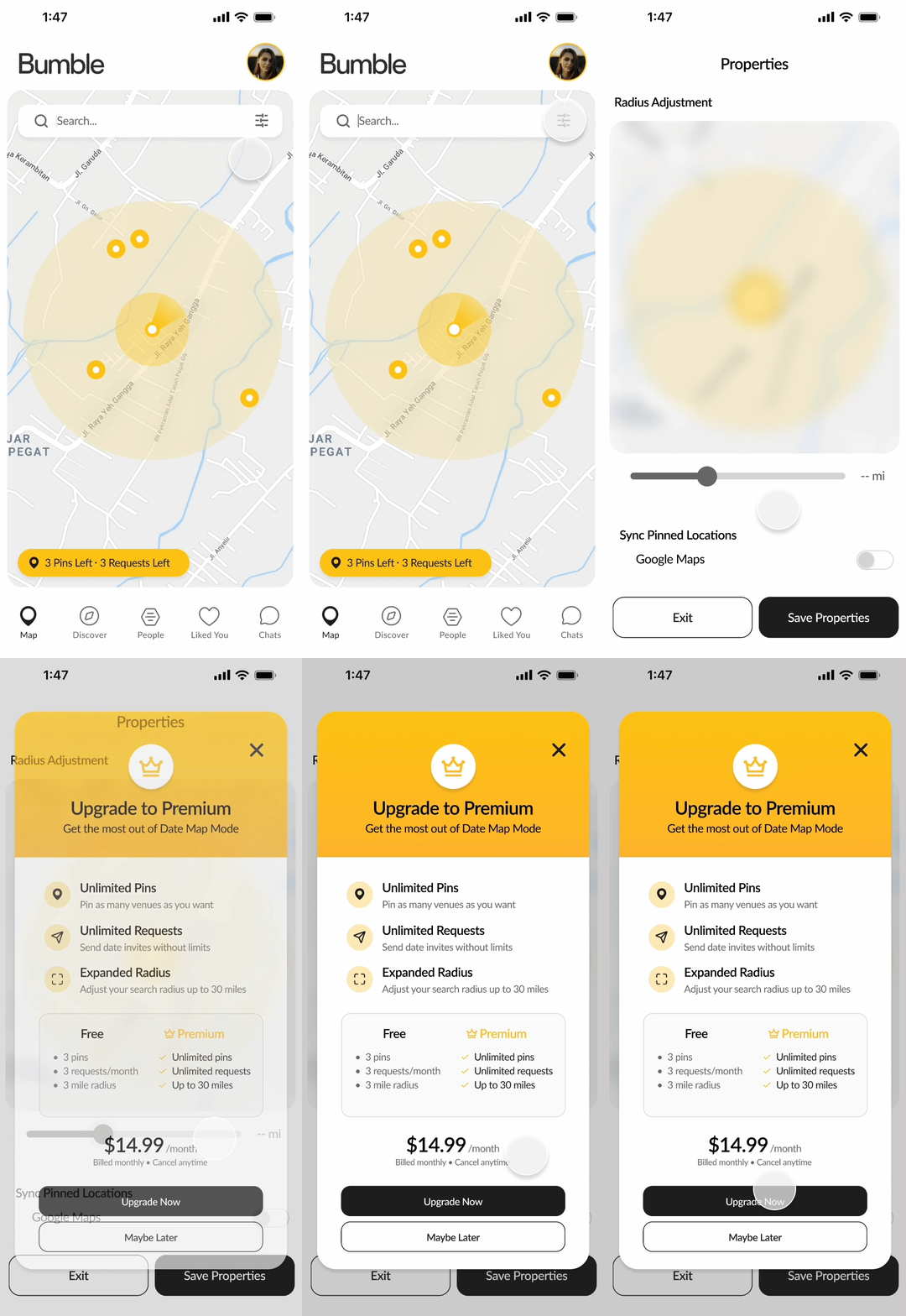
Premium Features
Unlock enhanced options with Premium. Enjoy unlimited pins and date requests, along with additional location-based filtering like radius adjustments and third-party app syncing to help you discover more compatible matches nearby.
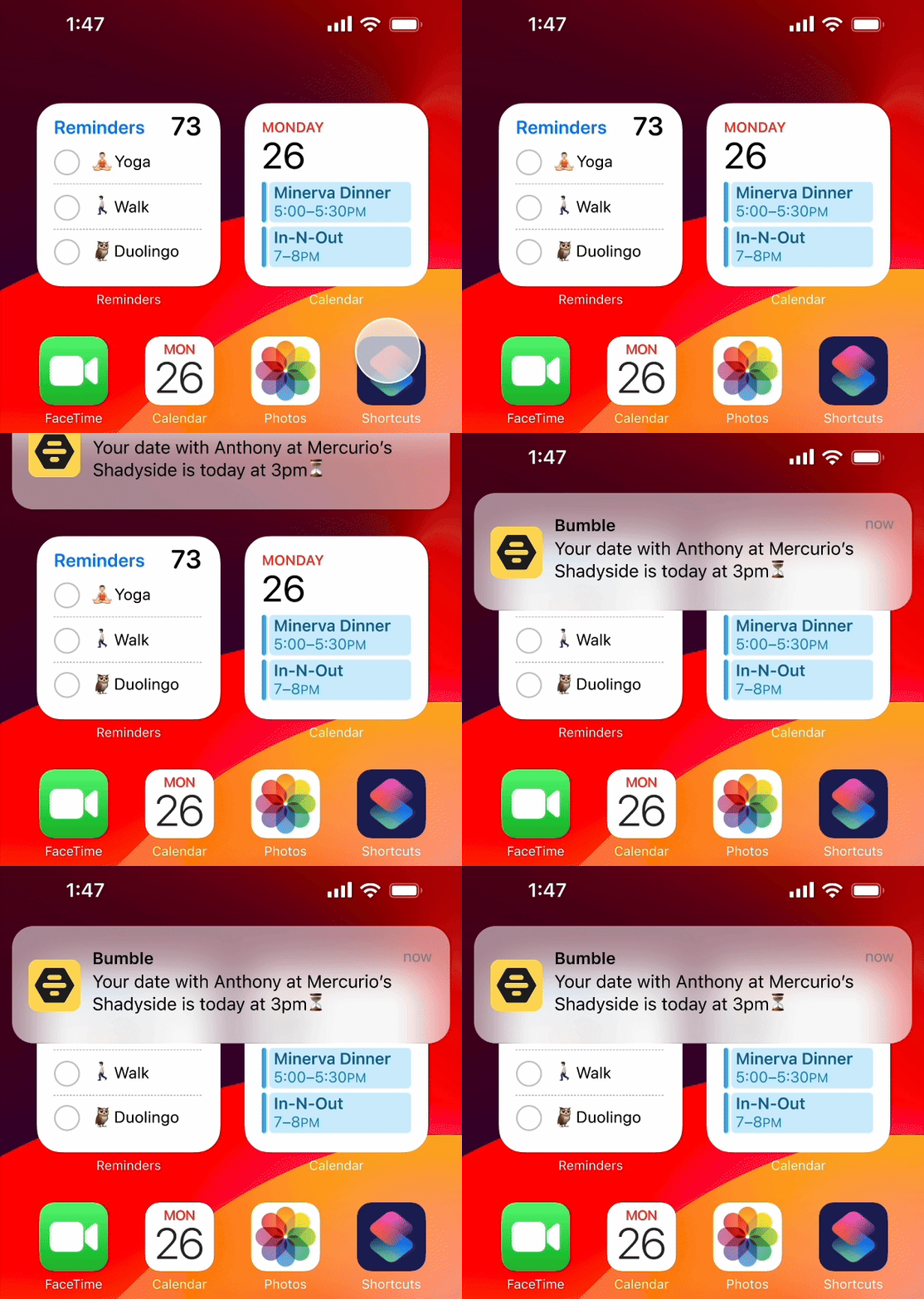
Notifications
Receive subtle, contextual alerts.


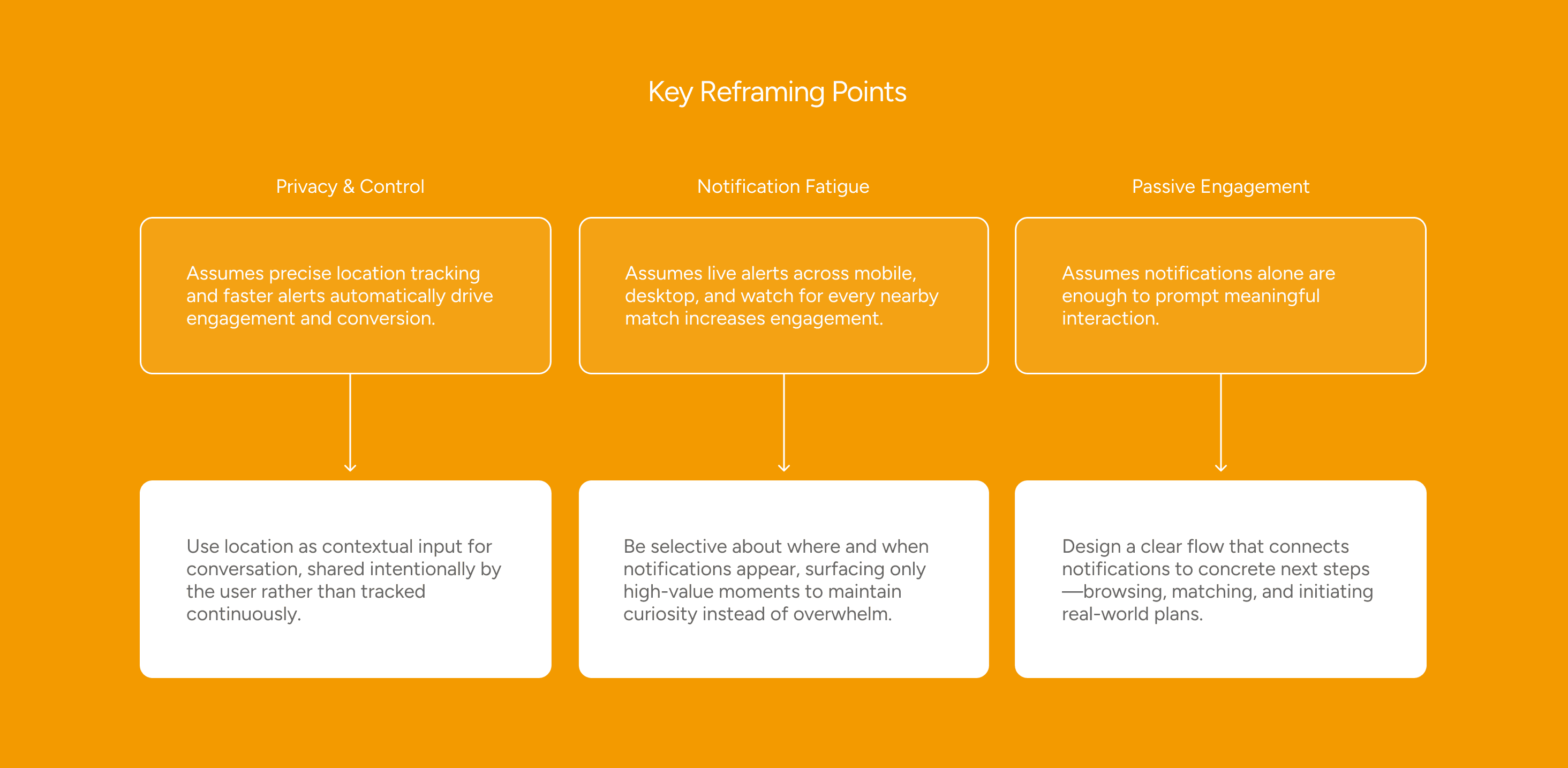
Reframing the Brief
The original brief defined growth narrowly on metrics alone, without accounting for user experience complexity.
I was given a Bumble design brief that aimed to increase premium subscriptions by using precise location notifications, alerting users across mobile, desktop, and watch when a potential match was within 0.5 kilometers through enhanced location services.
Research
Analyzing existing Bumble data from the past and conducting user research to discover user needs.
This analysis draws on retention data from Bumble’s former Proximity Alerts and Map Integration features (Jan–Jul 2024), alongside survey insights on average likes from 20+ users.
Quantitative Data Analysis
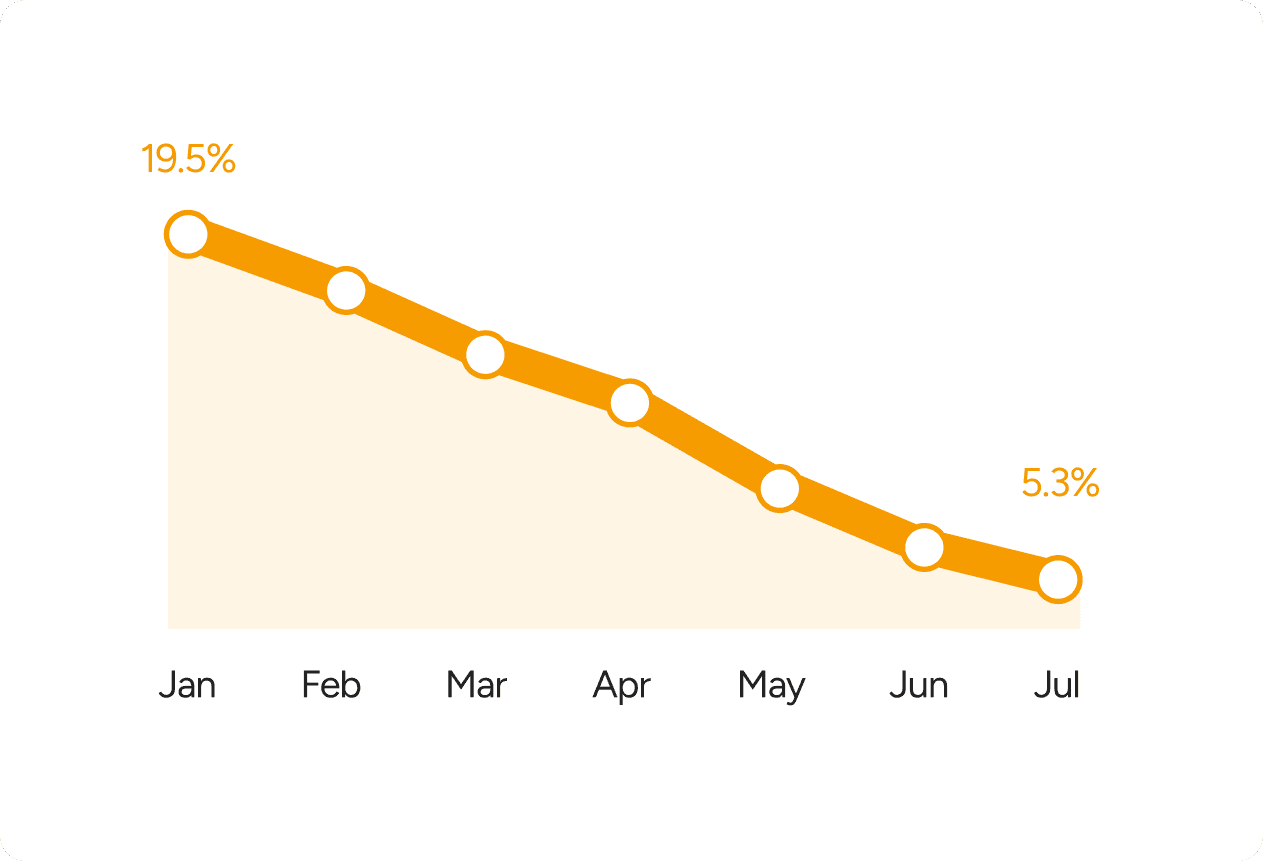
Feature Retention
Retention for both Proximity Alerts and Map Integration declined rapidly over a six-month period, indicating that increased accuracy or frequency alone does not sustain long-term engagement.
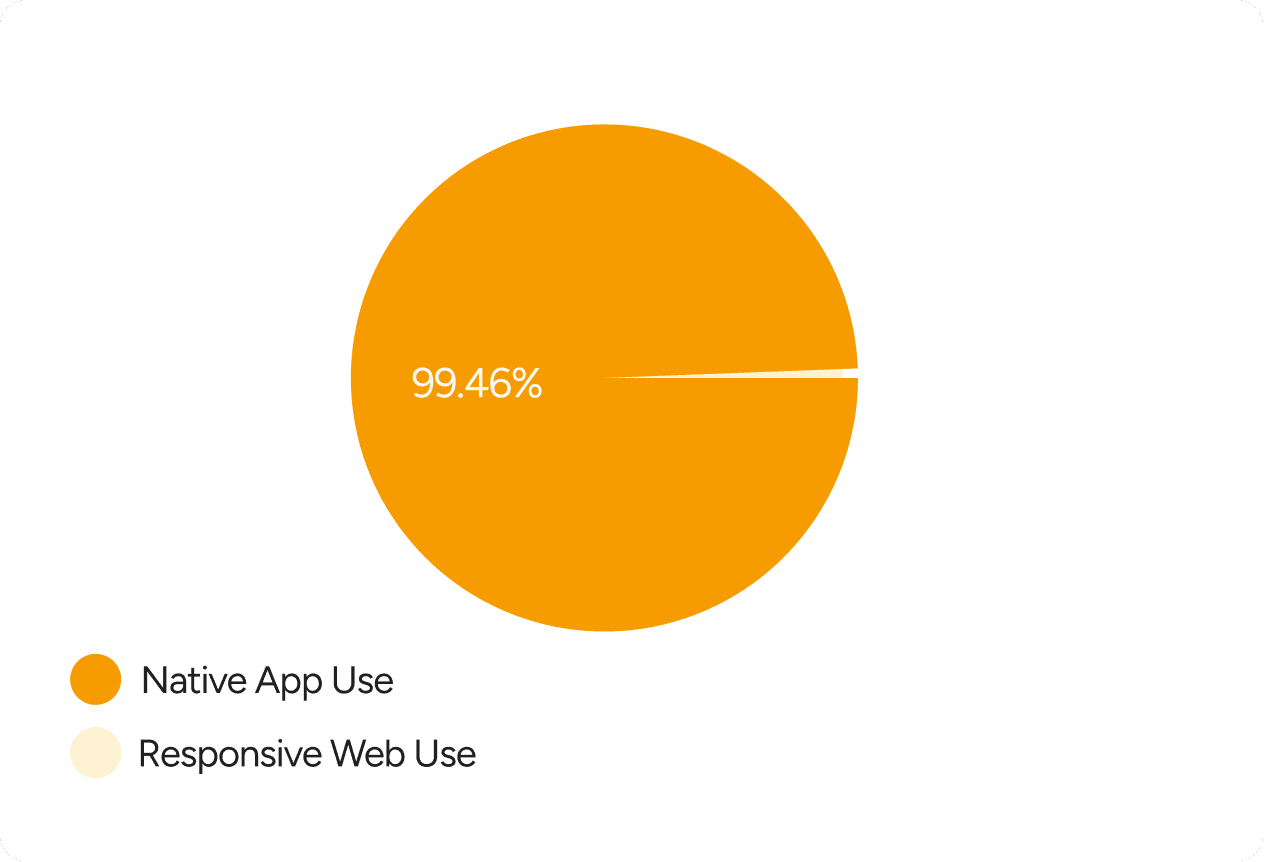
Platform Usage
Over 99% of Bumble users engage through the native mobile app, while less than 1% use the responsive web experience.
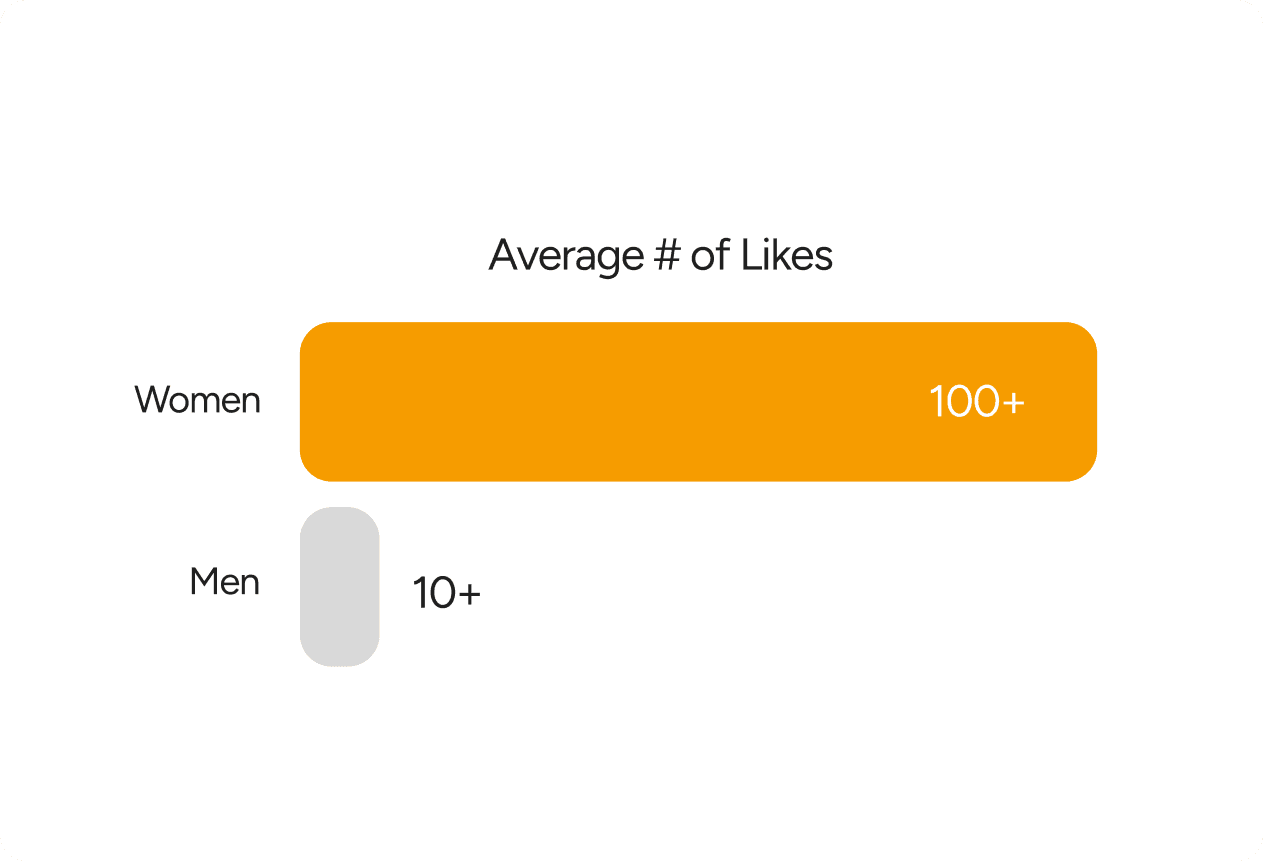
Average Likes
Survey data indicates a significant imbalance in average likes received: women receive substantially more likes of 100+, in comparison to men.
Qualitative Data Analysis
User Interviews
High volumes of incoming likes lead to swiping fatigue for women, while lower match rates push men toward mass-swiping. This dynamic results in less intentional matches and reduced engagement for both sides.
Female A, 19
“I put one photo of myself, and the rest were just pictures of my dogs. Somehow I got 200+ likes”
Female B, 20
“It honestly feels more like getting likes on Instagram than a genuine sign of interest”
Male A, 19
“After a week on this app, I finally got to match with this one baddie... and she ends up ghosting me anyways”
Competitor Analysis
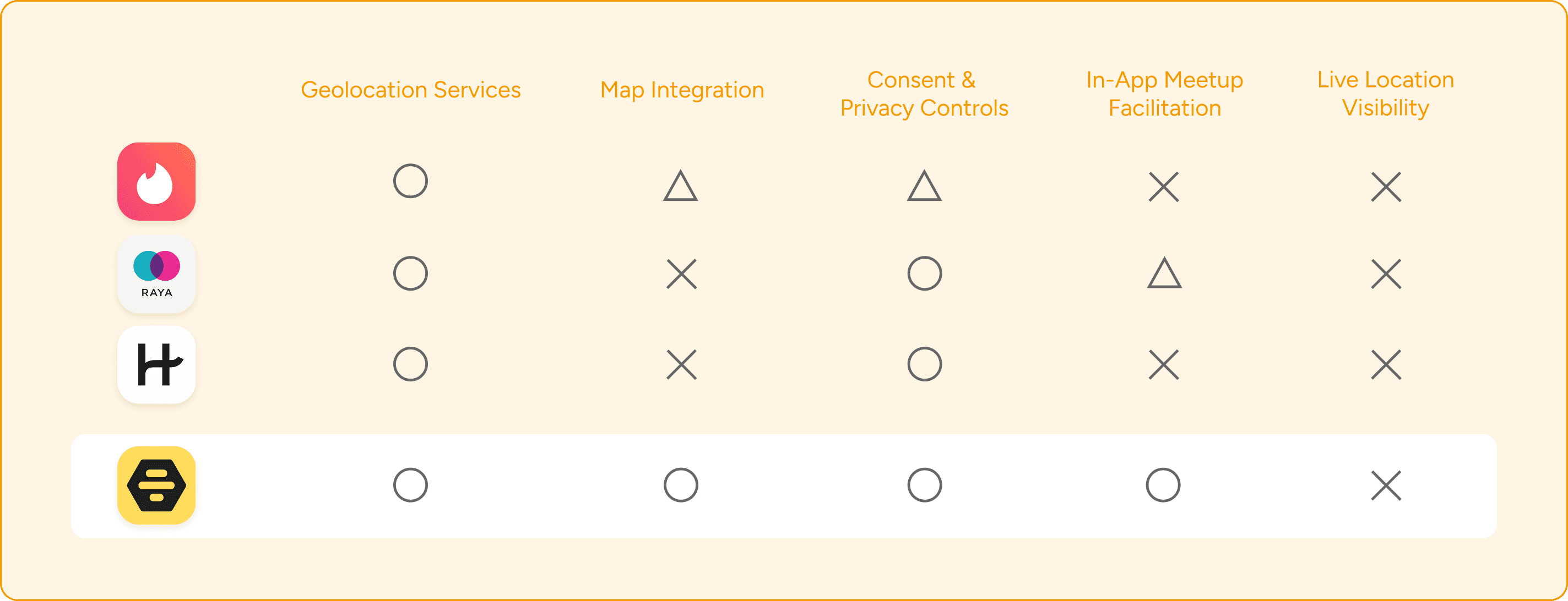
I conducted a competitor analysis to examine how existing dating apps implement location-based features, and to understand why certain approaches are consistently adopted/avoided across the market. These findings informed the criteria used to evaluate opportunities for new location-based interactions to be integrated into Bumble’s new feature.
Key Insights
1. Attention is unevenly distributed across users
Survey data shows women receive substantially more likes than men, while men receive far fewer. This imbalance contributes to mass-swiping, lower match quality, and reduced intentionality on both sides.
→ Highlighting an opportunity for features that introduce context and support meaningful interactions.
2. Passive location features do not lead to meaningful action
Retention data from Bumble’s former Proximity Alerts and Map Integration features declined rapidly over six months, indicating that increased precision or notification frequency alone does not sustain engagement. Competitive analysis further shows that while most dating apps use geolocation, it is typically treated as a passive filter rather than an interaction driver.
→ Together, this highlights an opportunity to move beyond location as background metadata and design experiences that turn proximity into intentional, real-world action.
3. Missing features reflect real constraints, not oversight
Competitive analysis shows that live location visibility and in-app meetup facilitation are largely absent across major dating platforms, despite all platforms having geolocation services available.
→ When absence points become a commonality among all competitors, it more so translates to challenges around user trust, privacy, and comfort rather than business opportunities. These constraints must be addressed deliberately rather than bypassed.
Design Process
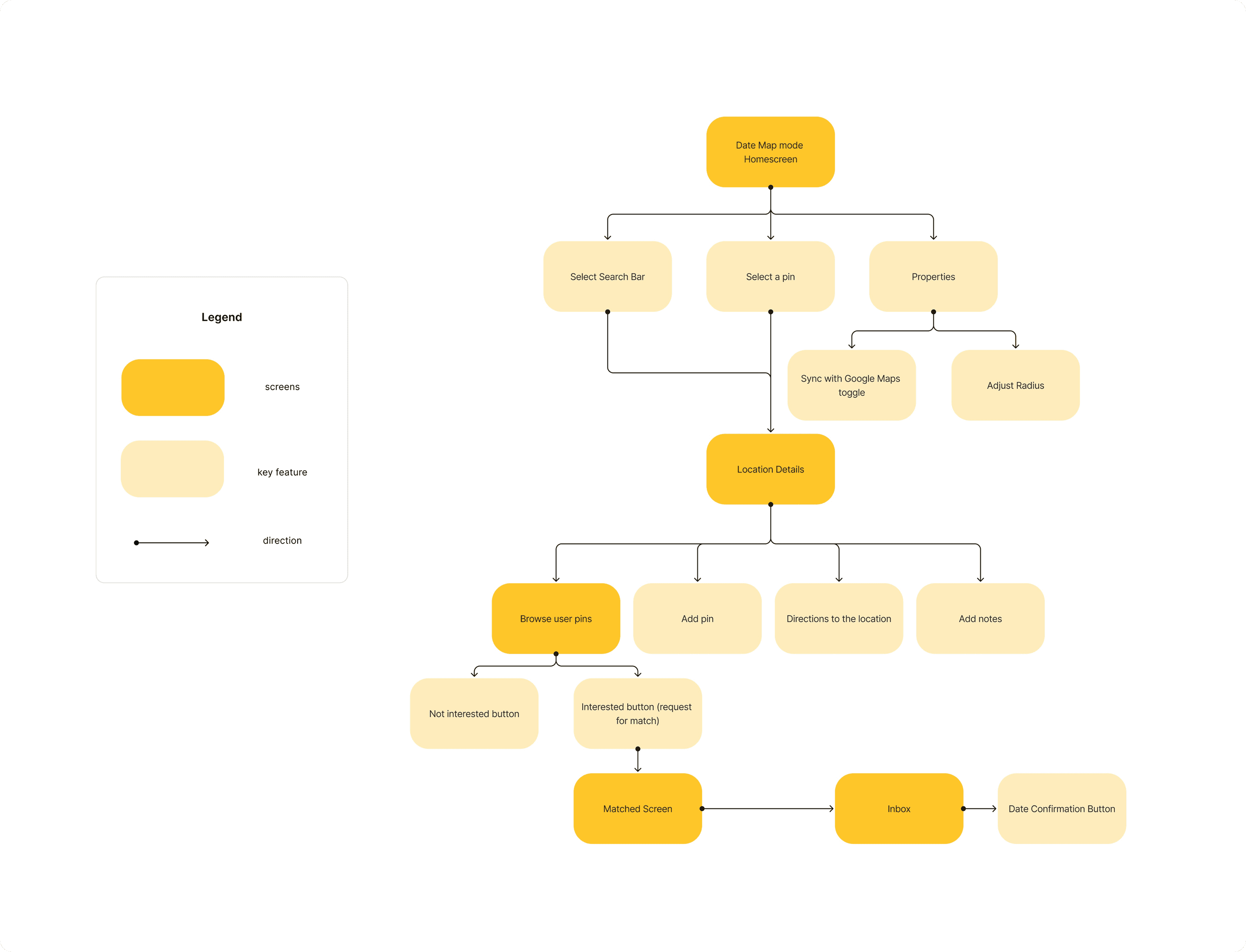
User Flow Chart
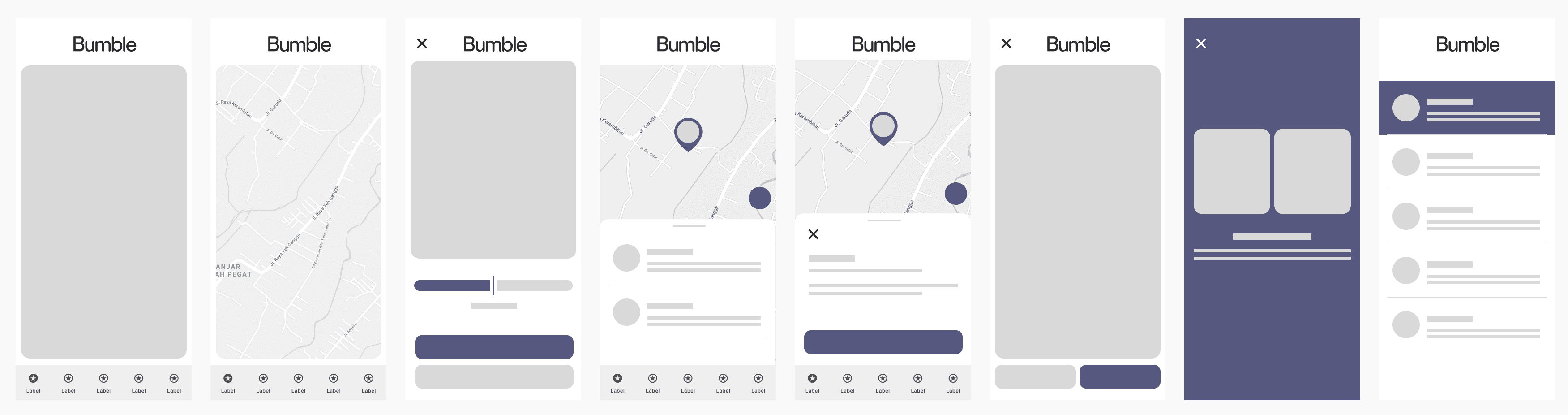
Low-Fidelity Wireframes
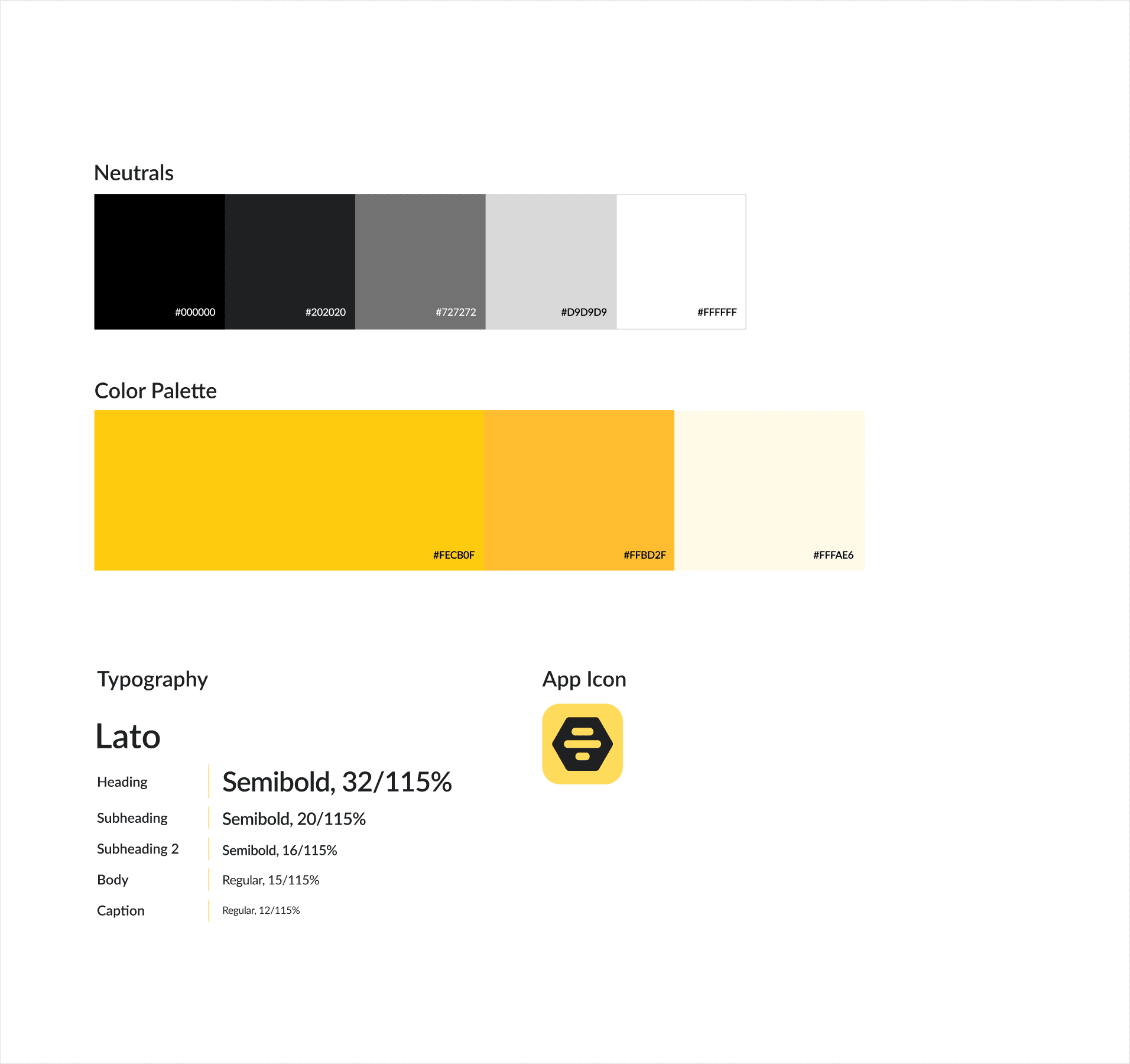
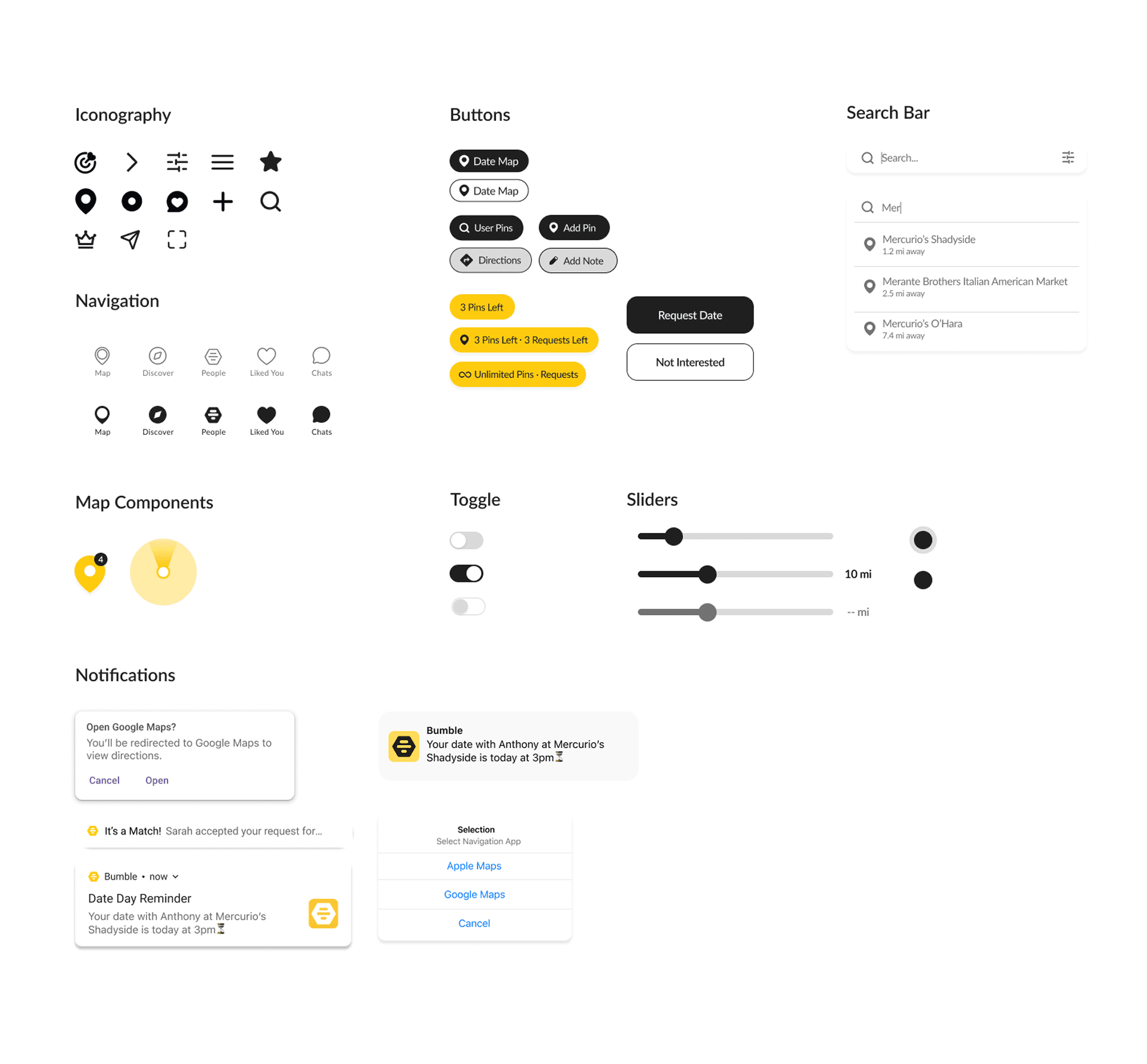
Design System
Reflection
Final thoughts on my first try at Figma and user-centered product design.
Bumble Date Map Mode was my first product design project, and it shaped how I approach UX and product thinking. Through this project, I learned to ground design decisions in user research and competitive data rather than assumptions. Reframing the original brief helped me design with empathy, focusing on onboarding, micro-interactions, and intentional location sharing to create a more human experience within a metric-driven problem.
This project also pushed me to balance user trust and experience with engagement and monetization goals. With more time, I would further validate the feature through A/B testing and iteration to refine both the interaction model and its business impact.